31.8.07
Friday Hat Blogging

The cloche hat. Popular in the flapper-tastic 1920s.
[Aside: After two months of incomplete stories (I count about a dozen), I've finally written something, for this week's Sunday Scribblings prompt. It feels like a huge relief. I was wondering if I'd ever finish anything again. I'm going to sleep on it, edit it, and post it tomorrow morning (BST).]

29.8.07
Psychedelic Crater Descent

NASA reports that Mars rover Spirit "recently overtook the classic Viking 2 Lander's spot as the second-longest-lasting spacecraft on the surface of Mars: 1290 sols (martian days) and counting!" Viking 2 was, of course, a mission from the 1970s, hence the funkedelic image above to celebrate. Apparently.
Meanwhile, according to this post on the Planetary Society blog, Opportunity is finally poised to descend into Victoria Crater.
Apologies if I'm lax on the blogging at the mo, I'm still feeling unwell, and having trouble thinking let alone typing. (For example, I just had to edit this post to change the label to Mars, from Pluto. Bit of a difference.)
27.8.07

25.8.07
DVD Review: Ghost in the Shell: Stand Alone Complex: 2nd Gig: Volume 7: Colon Explosion
So I've finally seen all of the second series (or 2nd Gig, as it's known) of Stand Alone Complex, the episodic spin-off from the cyberpunk Ghost in the Shell franchise. Given that the concluding TV movie Ghost in the Shell: Stand Alone Complex: Solid State Society has been released in the UK just this week (to the sound of ':' keys breaking across the nation), I thought it would be an apt time to review the final volume of 2nd Gig, and try to express my conflicting opinions on Stand Alone Complex as a whole.

Looking back on the first series (1st Gig, I guess you could call it, although no-one really does), the recurring 'Laughing Man' storyline was several orders of magnitude better than the episodes which tried to shoehorn a single story into their twenty-five minute running time (often resorting to exposition and coincidence to do so). As a huge fan of Mamoru Oshii's 1995 Ghost in the Shell feature film, I would even say that the Laughing Man episodes can stand shoulder-to-shoulder with his work, even if they aren't quite up to the same standard. For this reason, 2nd Gig understandably focuses most of its episodes on a central mystery, and, less understandably, does pretty badly at it.
Writer-director Kenji Kamiyama apparently took this over-arching storyline as an excuse to ignore the individual worth of any single episode. Many episodes, rather than possessing any kind of climax or cliffhanger, instead finish with us being parcelled out some small nugget of information about the central mystery, or some mechanically plotted piece of foreshadowing. Some of the episodes consist almost entirely of exposition that could have easily been more interestingly or more succinctly presented. And, apparently unable to work the main characters of Security Section 9 into all the important events, Kamiyama instead has our heroes watch many of the most dramatic parts of the story on TV (I can, at least, identify with them quite well in this respect). Whenever Section 9 actually do seem to do something of worth, we're then treated to shadowy villain Gohda smiling evilly and remarking that they reacted exactly as he had planned them to. Rather than protagonists struggling against adversity, 2nd Gig all too often seems to be merely presenting us with a bunch of stuff that happens.
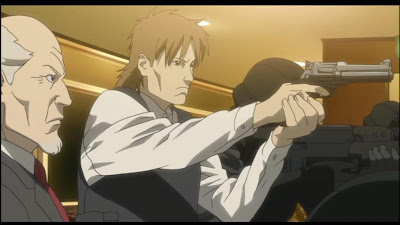
It's not all bad, of course. Thanks to the success of the first series, 2nd Gig has seriously ramped up the production values, constantly providing luscious, atmospheric visuals and smooth, dynamic movement. If I tend to be a little harsh on action films that fail to measure up, it's only because Stand Alone Complex has absolutely spoiled me rotten with its fluid, perfectly choreographed, perfectly framed, perfectly paced action scenes.
As with the first season, there are also those episodes that avoid the recurring storyline. And, in a complete reversal, these are the ones that stand out as particularly excellent. The problem of fitting a whole plot into twenty-five minutes has been solved by instead making these episodes simple vignettes that focus on a particular character. Motoko stumbles upon hidden memories from her childhood; taciturn Paz is stalked by a former lover who has stolen his appearance; mysterious Saito relates how he met Motoko and lost his eye (unsurprisingly in the same incident). These episodes are exciting, moving, atmospheric, occasionally even understated. I'd go so far as to say that the episode about Motoko's childhood is easily one of the most affecting pieces of animation I've seen.

The final three episodes, of course, do not include such a vignette. And if I was hoping that all the exposition and foreshadowing we were subjected to in previous episodes meant that we would now get a stonking, all-action, all-drama finale, I was also disappointed. Where these last three episodes do best is not in giving us relentless action or emotional development, but instead in reminding us of the nifty ideas and themes underlying the main storyline. Immigration, terrorism and democratic disaffection are all dealt with as part of a situation that develops as a direct allegory for Japan's (and many other nations', I would add) involvement in the Iraq war. At it's most obvious, we see a mostly civilian area being bombarded with shells and missiles before cutting to a television journalist calmly reporting the event to us as if it were all civilised and unavoidable.
Moments like this are what work best about the main storyline, especially with regard to prime anti-hero Hideo Kuze. The result of a mental computer virus designed to create 'heroes' - with the intention that they will actually be considered terrorists and unwittingly aid a sinister right-wing agenda – Kuze is apparently the one-in-a-million real hero: a man of enormous charisma who will fight when it is necessary but otherwise eschews violence. Of course, it's easy for Kuze to be sanguine, with his bulletproof, military-issue 'prosthetic body'. Many of the desperate, impoverished refugees who flock to him, however, are a little more jittery on the trigger, and the way that Kuze's almost romantic heroism is reinterpreted, misunderstood and twisted by his followers is another nifty part of the series. I'm reminded of the contrast between Jesus and many Christians. Kuze even acquires some stigmata when he's shot through the hand.
2nd Gig, while we're on the subject, is keen to try and achieve the weightiness of Oshii's feature film, heaping on the symbolism to little actual effect. At one point, Motoko hands Kuze an apple while her perennial admirer Batou tries to literally bash his way into the scene with a giant crucifix. Those who come to Stand Alone Complex seeking subtlety will leave quite empty handed.

Probably the best example of all the missed chances I saw in this show is the light suddenly cast on very minor character Proto. A delicate, reticent, slightly sad fellow with a quiet dedication, he's utterly unlike any of the other members of Section 9. Why then is such an interesting personality given only scant seconds of screen time before stepping forward in the final three episodes? And yet, I can't complain entirely, because he is an interesting character, and he is given some focus in these last episodes. As with everything else to do with Stand Alone Complex, it's a case of brilliant ideas with mixed execution.

Looking back on the first series (1st Gig, I guess you could call it, although no-one really does), the recurring 'Laughing Man' storyline was several orders of magnitude better than the episodes which tried to shoehorn a single story into their twenty-five minute running time (often resorting to exposition and coincidence to do so). As a huge fan of Mamoru Oshii's 1995 Ghost in the Shell feature film, I would even say that the Laughing Man episodes can stand shoulder-to-shoulder with his work, even if they aren't quite up to the same standard. For this reason, 2nd Gig understandably focuses most of its episodes on a central mystery, and, less understandably, does pretty badly at it.
Writer-director Kenji Kamiyama apparently took this over-arching storyline as an excuse to ignore the individual worth of any single episode. Many episodes, rather than possessing any kind of climax or cliffhanger, instead finish with us being parcelled out some small nugget of information about the central mystery, or some mechanically plotted piece of foreshadowing. Some of the episodes consist almost entirely of exposition that could have easily been more interestingly or more succinctly presented. And, apparently unable to work the main characters of Security Section 9 into all the important events, Kamiyama instead has our heroes watch many of the most dramatic parts of the story on TV (I can, at least, identify with them quite well in this respect). Whenever Section 9 actually do seem to do something of worth, we're then treated to shadowy villain Gohda smiling evilly and remarking that they reacted exactly as he had planned them to. Rather than protagonists struggling against adversity, 2nd Gig all too often seems to be merely presenting us with a bunch of stuff that happens.

It's not all bad, of course. Thanks to the success of the first series, 2nd Gig has seriously ramped up the production values, constantly providing luscious, atmospheric visuals and smooth, dynamic movement. If I tend to be a little harsh on action films that fail to measure up, it's only because Stand Alone Complex has absolutely spoiled me rotten with its fluid, perfectly choreographed, perfectly framed, perfectly paced action scenes.
As with the first season, there are also those episodes that avoid the recurring storyline. And, in a complete reversal, these are the ones that stand out as particularly excellent. The problem of fitting a whole plot into twenty-five minutes has been solved by instead making these episodes simple vignettes that focus on a particular character. Motoko stumbles upon hidden memories from her childhood; taciturn Paz is stalked by a former lover who has stolen his appearance; mysterious Saito relates how he met Motoko and lost his eye (unsurprisingly in the same incident). These episodes are exciting, moving, atmospheric, occasionally even understated. I'd go so far as to say that the episode about Motoko's childhood is easily one of the most affecting pieces of animation I've seen.

The final three episodes, of course, do not include such a vignette. And if I was hoping that all the exposition and foreshadowing we were subjected to in previous episodes meant that we would now get a stonking, all-action, all-drama finale, I was also disappointed. Where these last three episodes do best is not in giving us relentless action or emotional development, but instead in reminding us of the nifty ideas and themes underlying the main storyline. Immigration, terrorism and democratic disaffection are all dealt with as part of a situation that develops as a direct allegory for Japan's (and many other nations', I would add) involvement in the Iraq war. At it's most obvious, we see a mostly civilian area being bombarded with shells and missiles before cutting to a television journalist calmly reporting the event to us as if it were all civilised and unavoidable.
Moments like this are what work best about the main storyline, especially with regard to prime anti-hero Hideo Kuze. The result of a mental computer virus designed to create 'heroes' - with the intention that they will actually be considered terrorists and unwittingly aid a sinister right-wing agenda – Kuze is apparently the one-in-a-million real hero: a man of enormous charisma who will fight when it is necessary but otherwise eschews violence. Of course, it's easy for Kuze to be sanguine, with his bulletproof, military-issue 'prosthetic body'. Many of the desperate, impoverished refugees who flock to him, however, are a little more jittery on the trigger, and the way that Kuze's almost romantic heroism is reinterpreted, misunderstood and twisted by his followers is another nifty part of the series. I'm reminded of the contrast between Jesus and many Christians. Kuze even acquires some stigmata when he's shot through the hand.
2nd Gig, while we're on the subject, is keen to try and achieve the weightiness of Oshii's feature film, heaping on the symbolism to little actual effect. At one point, Motoko hands Kuze an apple while her perennial admirer Batou tries to literally bash his way into the scene with a giant crucifix. Those who come to Stand Alone Complex seeking subtlety will leave quite empty handed.

Probably the best example of all the missed chances I saw in this show is the light suddenly cast on very minor character Proto. A delicate, reticent, slightly sad fellow with a quiet dedication, he's utterly unlike any of the other members of Section 9. Why then is such an interesting personality given only scant seconds of screen time before stepping forward in the final three episodes? And yet, I can't complain entirely, because he is an interesting character, and he is given some focus in these last episodes. As with everything else to do with Stand Alone Complex, it's a case of brilliant ideas with mixed execution.
18.8.07
B-Games

TIGSource are holding a 'B-Game' competition, looking for games so bad they're good. I couldn't resist, and neither could about a million other people. My idea for a fundamentally flawed concept was to try and come up with the computer game equivalent of The Seventh Seal. After a lot of head scratching I decided that what that actually meant was that the aim of the game must be to come to terms with the fact that you can't really 'win' or solve the mystery or anything.
To that end, I'm writing a mostly text-based game with hundreds of different options, all of which either (i) uncover more options (ii) kill you or (iii) do nothing helpful at all.
The competition closes on September 13th.
16.8.07
Origami Cat

I find my cat enjoys playing with screwed up pieces of paper as much as anything I might actually spend money on.
15.8.07
Keaton Collaborators
I've been meaning to do this for a while now. Watching Buster Keaton's films, I tend to spend a lot of time going, "Hey, that guy was in one of Keaton's other films, but I can't remember what his name is!" The internet is little help in this regard, there being no pages that list Buster Keaton's collaborators, regulars, favourite actors, whatever you want to call them. Wouldn't it be great, I thought, if there were somewhere on the net where you could match the faces to the names?
So here it is. Ordered by the number of Keaton films they've featured in, Buster Keaton's little gang - or at least, all the faces that I find memorable from his films. (Mouse-over the pictures to see which movie they're from.)
Joe Roberts - 18 Busters
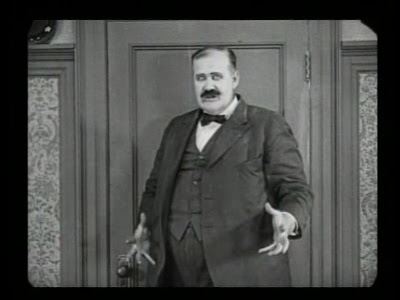
A long-time friend of Buster's, he played menacing and/or comic characters of large stature in pretty much all of his short films. Sadly, he died of a stroke in 1923, meaning that he only had the chance to appear in two of Keaton's feature length pictures.
Virginia Fox - 10 Busters

The daughter of the man who gave the Fox studio its name, Virginia played brash, alluring women in many of Buster's short films.
Joe Keaton - 10 Busters

Joe, father of Buster, played numerous small parts in his son's films - often sporting ridiculous make-up.
Sybil Seely - 5 Busters

The other leading lady common to many of Keaton's short films, Seely was more obviously pretty than Fox, but generally played less interesting characters.
Snitz Edwards - 3 Busters

A prolific character actor of the 1920s, Keaton obviously liked the look of his versatile face, casting him in prominent roles in three of his feature length pictures.
Erwin Connelly - 3 Busters

Memorable more for his interesting face than the size of his roles, Connelly had parts in three of Keaton's feature length pictures, most notably as a villain in Sherlock Jr.
So here it is. Ordered by the number of Keaton films they've featured in, Buster Keaton's little gang - or at least, all the faces that I find memorable from his films. (Mouse-over the pictures to see which movie they're from.)
Joe Roberts - 18 Busters

A long-time friend of Buster's, he played menacing and/or comic characters of large stature in pretty much all of his short films. Sadly, he died of a stroke in 1923, meaning that he only had the chance to appear in two of Keaton's feature length pictures.
Virginia Fox - 10 Busters

The daughter of the man who gave the Fox studio its name, Virginia played brash, alluring women in many of Buster's short films.
Joe Keaton - 10 Busters

Joe, father of Buster, played numerous small parts in his son's films - often sporting ridiculous make-up.
Sybil Seely - 5 Busters

The other leading lady common to many of Keaton's short films, Seely was more obviously pretty than Fox, but generally played less interesting characters.
Snitz Edwards - 3 Busters

A prolific character actor of the 1920s, Keaton obviously liked the look of his versatile face, casting him in prominent roles in three of his feature length pictures.
Erwin Connelly - 3 Busters

Memorable more for his interesting face than the size of his roles, Connelly had parts in three of Keaton's feature length pictures, most notably as a villain in Sherlock Jr.
14.8.07
Derren Brown - "Thieving Ratbag"
"I thought you accepted that here."
"Asshole."
"Can I just grab your wallet off you?"
Hang on a minute...!
13.8.07
Tricks of the Mind
I've always thought that Richard Dawkins was a much better voice for presenting the wonders of science rather than railing against the shortcomings of nonsense, but the first half of his new two-episode TV series, Enemies of Reason - this time tackling superstition and pseudoscience - has nicely set me straight.
There were, though - as there usually are with Dawkins - still a few points where I thought he wasn't getting his point across as well as he could. For example, we started by tackling astrology, which we are told is accepted by more Britons than believe in 'any one god'. As we delved into things, an astrologer told us that the stars and planets don't cause things to happen, but rather signify events. Dawkins responded by saying that he didn't see how they could be signifiers, and I thought yes, quite right. The planets move in a very orderly, regular fashion. It's difficult to accept that the bubbly, surprising mass of events in history and everyday life could be predicted for the next few billion years by the clockwork, repetitious movements of the Solar System. But the astrologer interrupted and said that Dawkins didn't like it because he didn't know how they could be signifiers and that it was a deep mystery as to how it worked. Dawkins agreed and we moved on to the next segment. No, I thought, don't agree with him!
That is exactly the wrong side of the debate to be on. People like astrologers always want to claim the romantic aura of mystery, while at the same time clinging to unsupported superstitions rather than admitting that they don't have any better an understanding of why things happen than the rest of us do. Or to put it another way: when I lose a sock, I don't know where it is or what happened to it. It's a mystery! But an astrologer knows exactly what's going on (or so he or she thinks): the sock has gone missing because Venus is in retrograde - no mystery there! And of course, I've written before about how astrology ignores the countless mysteries of the Solar System in favour of a geocentric system of moving lights in the sky - in fact the line "astrology is an aesthetic affront" is one, to my knowledge, coined by Dawkins.
So no, I don't like letting the astrologer act as if sceptics are balking at a mystery, at not understanding how it works. As Carl Sagan once pointed out: it doesn't matter if we know how it works or not. There are plenty of phenomena we have evidence for, but which we don't understand. What matters is that there is no evidence astrology works, plenty that it does not, and much more contradicting its geocentric world view. In this case we favour mystery over a trite, clockwork, small and oversimplified world view. (Although a discussion of how astrology might work is an interesting way to see just how vague and self-contradictory it is, as Phil Plait demonstrates here.)
But aside from that one niggle, I was surprised to see the rest of show put such a powerful case forward, indeed I now realise that Dawkins ultimately went on to make a similar argument to the one I did above: that superstition is a way of taking refuge from a complicated and apparently random world. He also did a nice job of dispelling a lot of the peculiar prejudices that people seem to acquire about science - for example, pointing out to a post-modernist that science is very much against 'experts' claiming special authority, or relating how scientists came to understand the way that bats 'see' in the dark. The idea that they used sonar was initially very unpopular, it turns out, but it came to be supported by multiple lines of corroborating evidence. Compare to that, Dawkins suggested, the vague and paltry offering of evidence that is supposed to convince us of psychic powers in humans.
Perhaps the best constructed sequence involved everyone's favourite illusionist, Derren Brown (coming soon to American TV screens, I believe). We saw him 'contacting' the dead relatives of his show's audience, and then explaining how he did it. Flash forward to Dawkins attending a spiritualist church, where we saw exactly the same thing happening, only this time everyone was believing it - desperately. Psychics taking advantage of the bereaved is the most often cited evil of superstition, but Dawkins was keen to point out the many other dangers that arise from shoddy thinking, from racist conspiracy theories to unvaccinated children. Acknowledging that verifiable evidence is a better way of perceiving the Universe than personal feeling is the only way to protect ourselves from dangerous lies and untruths, Dawkins concluded. Roll on episode two.
There were, though - as there usually are with Dawkins - still a few points where I thought he wasn't getting his point across as well as he could. For example, we started by tackling astrology, which we are told is accepted by more Britons than believe in 'any one god'. As we delved into things, an astrologer told us that the stars and planets don't cause things to happen, but rather signify events. Dawkins responded by saying that he didn't see how they could be signifiers, and I thought yes, quite right. The planets move in a very orderly, regular fashion. It's difficult to accept that the bubbly, surprising mass of events in history and everyday life could be predicted for the next few billion years by the clockwork, repetitious movements of the Solar System. But the astrologer interrupted and said that Dawkins didn't like it because he didn't know how they could be signifiers and that it was a deep mystery as to how it worked. Dawkins agreed and we moved on to the next segment. No, I thought, don't agree with him!
That is exactly the wrong side of the debate to be on. People like astrologers always want to claim the romantic aura of mystery, while at the same time clinging to unsupported superstitions rather than admitting that they don't have any better an understanding of why things happen than the rest of us do. Or to put it another way: when I lose a sock, I don't know where it is or what happened to it. It's a mystery! But an astrologer knows exactly what's going on (or so he or she thinks): the sock has gone missing because Venus is in retrograde - no mystery there! And of course, I've written before about how astrology ignores the countless mysteries of the Solar System in favour of a geocentric system of moving lights in the sky - in fact the line "astrology is an aesthetic affront" is one, to my knowledge, coined by Dawkins.
So no, I don't like letting the astrologer act as if sceptics are balking at a mystery, at not understanding how it works. As Carl Sagan once pointed out: it doesn't matter if we know how it works or not. There are plenty of phenomena we have evidence for, but which we don't understand. What matters is that there is no evidence astrology works, plenty that it does not, and much more contradicting its geocentric world view. In this case we favour mystery over a trite, clockwork, small and oversimplified world view. (Although a discussion of how astrology might work is an interesting way to see just how vague and self-contradictory it is, as Phil Plait demonstrates here.)
But aside from that one niggle, I was surprised to see the rest of show put such a powerful case forward, indeed I now realise that Dawkins ultimately went on to make a similar argument to the one I did above: that superstition is a way of taking refuge from a complicated and apparently random world. He also did a nice job of dispelling a lot of the peculiar prejudices that people seem to acquire about science - for example, pointing out to a post-modernist that science is very much against 'experts' claiming special authority, or relating how scientists came to understand the way that bats 'see' in the dark. The idea that they used sonar was initially very unpopular, it turns out, but it came to be supported by multiple lines of corroborating evidence. Compare to that, Dawkins suggested, the vague and paltry offering of evidence that is supposed to convince us of psychic powers in humans.
Perhaps the best constructed sequence involved everyone's favourite illusionist, Derren Brown (coming soon to American TV screens, I believe). We saw him 'contacting' the dead relatives of his show's audience, and then explaining how he did it. Flash forward to Dawkins attending a spiritualist church, where we saw exactly the same thing happening, only this time everyone was believing it - desperately. Psychics taking advantage of the bereaved is the most often cited evil of superstition, but Dawkins was keen to point out the many other dangers that arise from shoddy thinking, from racist conspiracy theories to unvaccinated children. Acknowledging that verifiable evidence is a better way of perceiving the Universe than personal feeling is the only way to protect ourselves from dangerous lies and untruths, Dawkins concluded. Roll on episode two.
12.8.07
Portrait of an Explodey Snowball
 Image source with more information
Credit: NASA/JPL/Space Science Institute
This straightforward portrait from Cassini shows the variety of terrain on Saturn's small, icy moon Enceladus. The cratered regions are the kind of landscape you expect to see on rocky worlds far and wide, while the smooth, furrowed areas hint at the moon's dynamic geological secrets - of which the most obvious examples are the water-ice geysers on the moon's south pole (see this gorgeous image).
10.8.07
Friday God Blogging


Cupid, god of erotic love, seen here abducting Psyche. Because this blog needs more pictures of pretty naked people.
7.8.07
Hyperbole Mission

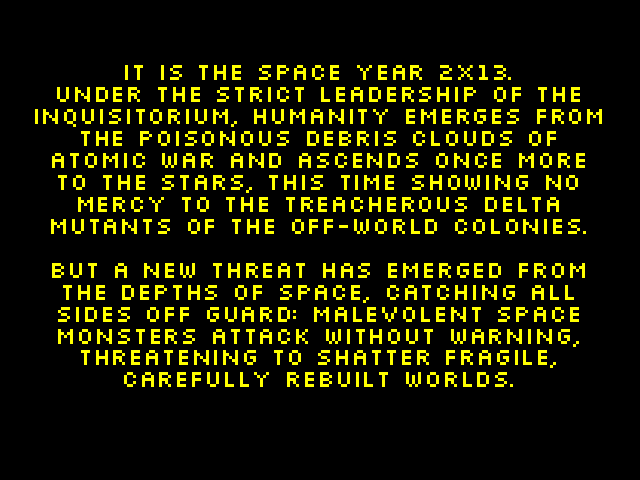
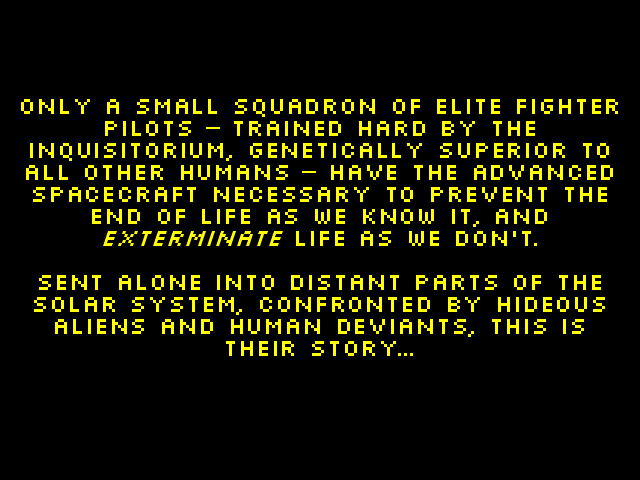
 Everything is distracting me from everything else at the moment, but I did have a flash of inspiration last night regarding TBTBSG. The tone and storyline came a little closer to... well, existing at all, and I bashed out this brief intro sequence for the game. (Click each image to view them full size.)
I'm not sure if this is an entertaining homage to the games of my youth, or just a load of rubbish, but either way these screens are in no way final.
5.8.07
Saturn: Good and Great
The Cassini imaging team (CICLOPS) are light years astronomical units ahead of everyone else when it comes to releasing gorgeous images of other worlds to the public, however it must be said that they don't release as many colour images as they could - you know, if they weren't busy doing science and all that stuff. As what I consider to be the chief testament to NASA's coolness, however, raw images from all their unmanned missions are released into the public domain via the Internet. That way, image gurus like Gordan Ugarkovic can assemble colour pictures wherever the data exists (albeit after a nine month period where CICLOPS have the exclusive).
Gordan's latest such composite is the most recent image featured on Riding with Robots, and you must drop everything you are doing and click this link to view it now - preferably taking a deep breath beforehand in preparation for any exclamations you may wish to utter. This colour, animated image shows the Saturnian system in motion over a period of about an hour, as Saturn spins on its axis and Titan and Dione orbit around it. Unspeakably nifty.
The Cassini team themselves have meanwhile published an article in Nature detailing their research into the origin of Saturn's mysterious G ring.
Read the news article here. You can also view a movie of the 'arc' in the G ring here. It seems that relatively large chunks of ice exist in this arc, producing the particles that make up the G ring when they are struck by micrometeoroids.
Gordan's latest such composite is the most recent image featured on Riding with Robots, and you must drop everything you are doing and click this link to view it now - preferably taking a deep breath beforehand in preparation for any exclamations you may wish to utter. This colour, animated image shows the Saturnian system in motion over a period of about an hour, as Saturn spins on its axis and Titan and Dione orbit around it. Unspeakably nifty.
The Cassini team themselves have meanwhile published an article in Nature detailing their research into the origin of Saturn's mysterious G ring.
Unlike Saturn's other dusty rings, such as the E and F rings, the G ring is not associated closely with moons that either could supply material directly to it -- as Enceladus does for the E ring -- or sculpt and perturb its ring particles -- as Prometheus and Pandora do for the F ring. The location of the G ring continued to defy explanation, until now.
Read the news article here. You can also view a movie of the 'arc' in the G ring here. It seems that relatively large chunks of ice exist in this arc, producing the particles that make up the G ring when they are struck by micrometeoroids.
Mars: Good and Bad
 Image source
Credit: NASA
It's nice to know that while I was preoccupied, Phoenix successfully launched on a trajectory that will drop it on the northern polar regions of Mars. Phoenix is the first spacecraft since the Viking probes to specifically be looking for signs of life on Mars (ignoring, as a point of national pride, the ill-fated Beagle 2). You might like to take a gander at the nice Phoenix wrapup at the Planetary Society Blog.
On a more worrisome note, the latest news item on the Mars Rover website states that NASA are now starting to get worried about how one of the brave little robots may fare if the dust storm that engulfs it continues unabated:
Dust in the atmosphere and dust settling onto Opportunity's solar panels challenges the ability of the solar panels to convert sunlight into enough electricity to supply the rover's needs. The most recent communication from Opportunity, received Monday, July 30, indicates that sunlight over the rover's Meridiani Planum location remains only slightly less obscured than during the dustiest days Opportunity survived in mid-July. With dust now accumulating on the solar panels, the rover is producing barely as much energy as it is using in a very-low-power regimen it has been following since July 18.
Poor little 'bot. Here's hoping she makes it out the other side.
31.7.07
Outside, Looking In

When I went in the bathroom, I could hear a strange scrabbling sound that was at first difficult to place. A little bird was hopping around on the windowsill, up to no good I'm certain, occasionally peering in through the frosted glass.
I took this photo of the creature in the hopes of stopping it in its voyeuristic ways.
30.7.07
DVD Review: The Proposition

The Proposition is an almost psychedelic journey into the violent, untamed past of the outback, and probably the best film on the nature of crime and punishment that I've yet seen. As the film starts, lawman Captain Stanley (Ray Winstone) has just apprehended hardened criminal Charlie Burns (Guy Pearce) and his younger brother Mikey. As the three sit among the corpses of those who didn't survive the shoot-out, Stanley presents Charlie with the following (eponymous) proposition: if Charlie kills his dangerous older brother, Arthur, Mikey will avoid the noose.
As Stanley sees it, Mikey, a simpleton, and Charlie, mild and indecisive, are no real threat. Arthur, on the other hand is a cold, intelligent monster, completely without remorse. In his quest to, as he sees it, 'civilise this land', stopping Arthur from committing further crimes is more important to Stanley than punishing Charlie and Mikey for crimes that have already occurred. Unfortunately, everyone else in his little town has quite the opposite opinion, and although it might seem that Charlie is the one with the greatest dilemma, choosing as he is between two brothers, it is Stanley who finds himself treading the line between those actions he believes to be right, and those which cause others to despise him.

The single line which encapsulates the moral message I took from this film – not that it is, at least in any conventional sense, a morality tale – is uttered with disdain by 'fortune hunter' Jellon Lamb (a show-stealing performance by John Hurt): “We are, at bottom, one and the same.” In this specific case, Lamb is pouring scorn on Charles Darwin for claiming that white men share a common ancestry with monkeys, and -shock, horror- even aborigines. “We're Englishmen!” he rages, shortly after holding a knife to Charlie's throat, “Not beasts!” A later scene in which the people of Stanley's town are unable to watch the flogging they were so eager for Mikey to receive underscores the sentiment that Lamb is so appalled by: that Mikey is a person, just like us. Although he may have committed horrible crimes, flogging him (and the words don't convey the ordeal he is put through) is a horrible crime in itself. One does not excuse the other, as we are all the same: criminals and law abiding citizens.

Not that anyone in this movie manages to keep their hands clean – one striking example being when, to assuage his superiors, Stanley engages in the genocide of aborigines with only the weakest reluctance. In this case he is enacting the law of his era, simply doing away with 'rebel blacks'. But to a modern audience this is (hopefully) clearly as much an evil deed as anything the Burns gang has engaged in. This is a further assault on our notion of civilisation and what (if anything) separates us from animals – the reminder that our civilisations are almost all built on the vile mistreatment of people who merely happened to belong to other civilisations, but who we convinced ourselves were not the same as us.
One final thing I found to be especially conspicuous was Charlie's profound hesitancy. At one point late in the film, Lamb accuses him of being singularly useless, and the charge is definitely one that sticks. Charlie drifts quietly through the film, sent to his brother by Stanley's proposition, but unwilling to act either to help or hinder his sibling's misadventures. In a film in which violence is superbly depicted as never less than repugnant (often with a noticeable lack of explicitness – for example, blocking our view of the knife sliding in and instead leaving us only with the expression of the person being stabbed), the one act of violence that would be the most justifiable – killing Arthur Burns – is also the one which is left until the last possible moment, when Charlie is forced to act, not by any logical consequence of the plot, but purely by his humanity. I find Charlie's characterisation to be strangely compelling; he is representative of probably most of the people in the audience: the infamous good person who stands by and does nothing, even takes part if it seems like the done thing.

The Proposition is a powerful, atmospheric movie, alternating between almost surreal depictions of outback desolation and nail-biting scenes of menace. With perfect visuals, outstanding performances, and an absorbing, anachronistic soundtrack of ambient noise and quiet vocals, this is a film that can't help but make you sit up and listen, though there's no guarantee you'll like what it has to say.
29.7.07
Can art be interactive?
Roger Ebert is a reasonably famous American film critic who, from what little I know of him, I think is quite worthy of respect. When I bump into his name these days, though, it tends to be for his participation in the debate about whether or not computer games can be 'art'.
Personally, (and this may or may not surprise you) I struggle to effect any interest in this debate either way. So what if games aren't art? And I certainly think that Ebert is correct when he asserts that:
At least as far as the most mainstream or mainstream-styled are concerned, games are almost universally immature and/or simplistic. (I might actually point to Galatea and some other interactive fiction games as possible counter-examples.) But what's really grabbed my attention here is just why Ebert considers that games aren't art: because they're interactive. Because the artist creates something which is then altered by the person who attempts to appreciate it.
Cards on the table: I don't really understand what art is in the first place. As Wikipedia snappily puts it:
By these definitions, the term 'art' is definitely inclusive rather than exclusive. Computer games are certainly 'art' in this fashion, as are Mills and Boone romances, newspaper comic strips and pornographic movies. The exclusive variant of the word 'art' on the other hand, never fails to confuse me in terms of what it chooses to allow under its umbrella and what it turns its nose up at. Jack Vettriano's paintings aren't allowed into the club, but an unmade bed is. By Ebert's decree of non-interactivity, however, an unmade bed upon which visitors to the exhibit were encouraged to lie down would also fail to measure up.
To me, as someone whose first love is external reality (and by extension, science), this can't help but seem hopelessly subjective, relative and personal. No-one can really define art in objective (mathematical, for example) terms, so 'art' is whatever it means to you. Why then, do people make factual pronouncements like 'art can't be interactive', instead of providing personal opinions such as 'something that is interactive can't be art to me'?
Does anyone have any wisdom to offer me? Do you believe that art can't be interactive, that it's sole purpose is to provide a one-way conduit of ideas from creator to consumer? Do you have a definition for art that is both objective and exclusive?
Personally, (and this may or may not surprise you) I struggle to effect any interest in this debate either way. So what if games aren't art? And I certainly think that Ebert is correct when he asserts that:
To my knowledge, no one in or out of the field has ever been able to cite a game worthy of comparison with the great dramatists, poets, filmmakers, novelists and composers.
At least as far as the most mainstream or mainstream-styled are concerned, games are almost universally immature and/or simplistic. (I might actually point to Galatea and some other interactive fiction games as possible counter-examples.) But what's really grabbed my attention here is just why Ebert considers that games aren't art: because they're interactive. Because the artist creates something which is then altered by the person who attempts to appreciate it.
Cards on the table: I don't really understand what art is in the first place. As Wikipedia snappily puts it:
The most common usage of the word "art," which rose to prominence after 1750, is understood to denote skill used to produce an aesthetic result. Britannica Online defines it as "the use of skill and imagination in the creation of aesthetic objects, environments, or experiences that can be shared with others."
By these definitions, the term 'art' is definitely inclusive rather than exclusive. Computer games are certainly 'art' in this fashion, as are Mills and Boone romances, newspaper comic strips and pornographic movies. The exclusive variant of the word 'art' on the other hand, never fails to confuse me in terms of what it chooses to allow under its umbrella and what it turns its nose up at. Jack Vettriano's paintings aren't allowed into the club, but an unmade bed is. By Ebert's decree of non-interactivity, however, an unmade bed upon which visitors to the exhibit were encouraged to lie down would also fail to measure up.
To me, as someone whose first love is external reality (and by extension, science), this can't help but seem hopelessly subjective, relative and personal. No-one can really define art in objective (mathematical, for example) terms, so 'art' is whatever it means to you. Why then, do people make factual pronouncements like 'art can't be interactive', instead of providing personal opinions such as 'something that is interactive can't be art to me'?
Does anyone have any wisdom to offer me? Do you believe that art can't be interactive, that it's sole purpose is to provide a one-way conduit of ideas from creator to consumer? Do you have a definition for art that is both objective and exclusive?
28.7.07
Poll on Polls
How many times have you voted on this poll?
Well, I voted four times, for each possible answer.
Assuming the additional votes for 'twice' and 'I have lost count now' are separate people, that leaves a grand total of 2 people, or 40% of respondents who only voted once, hopefully because they were unable to vote more times. (If they just chose not to vote more times, they weren't really getting into the spirit of things.)
I look forward to the day when general elections are resolved using a blogspot poll widget.
| Once | 5 (50%) |
| Twice | 2 (20%) |
| Thrice | 1 (10%) |
| I have lost count now | 2 (20%) |
Well, I voted four times, for each possible answer.
Assuming the additional votes for 'twice' and 'I have lost count now' are separate people, that leaves a grand total of 2 people, or 40% of respondents who only voted once, hopefully because they were unable to vote more times. (If they just chose not to vote more times, they weren't really getting into the spirit of things.)
I look forward to the day when general elections are resolved using a blogspot poll widget.
23.7.07
Is it just me...
 More information and images
Credit: NASA/JPL-Caltech/Cornell
Or is it getting dark out here?
This chronological sequence of images shows increasingly darkened skies over Mars Rover Opportunity as it rides out a dust storm. As of this week, things seem to finally be starting to brighten.
22.7.07
Galatea

Galatea is an interactive fiction game in the form of a conversation with Pygmalion's eponymous statue - or, rather, an anachronistic variant of that character. Galatea isn't a game in the sense of it being something that you 'play' to try and reach a goal, but instead encourages the player just to interact with Galatea and see where you end up. Becoming best of friends, or being strangled by her are two possible endings.
As well as being an important milestone in modern interactive fiction (no longer viable as a medium for commercial games, and dominated almost entirely by dedicated hobbyists), Galatea is an example of how computer games can be meaningful, nuanced, moving and, dare I say it, grown-up. Given that the most popular, most financially lucrative computer games often combine mature content with immature tone, it can be nice to give yourself a little taste of how else things can be.
Game file (this link leads to a randomised mirror of the IFArchive - at least one of those mirrors is currently down, so just click it again if you get an error).
Run that file with a Windows/Linux, or Mac interpreter.
Subscribe to:
Posts (Atom)