2.7.12

Played it: Xenoblade Chronicles

It's taken me almost a year to get through Xenoblade Chronicles, completing the better part of its over 400 side quests and fully rebuilding a ruined city. There are still a few quests, hidden skill branches, optional bosses and rare items I've yet to tick off, but I feel that I've fully enjoyed the game without needing to scrape the sweet-but-crusty residue out of the bottom. Or not for a while yet, anyway.

Over 160 hours of gameplay later, I stand by my original opinion that this is the Japanese Role Playing Game we've been waiting for: the one that keeps everything that makes a JRPG a JRPG - the imaginative fantasy setting that mixes magic and technology, the beautiful heroes in outrageous fashions, the pacifistic and humanistic themes that nevertheless result in epic battles - but while clearly having learned the lessons of more open, less heavy-handed Western RPGs.

Xenoblade Chronicles is a progressive JRPG, and an enormous open-world adventure. Its only significant flaw is that its size and openness extend beyond what its otherwise laudable improvements are readily able to cope with. Exploring the huge, memorable, beautifully designed landscapes and discovering new things is one of the chief appeals of the game, but encountering numerous side quests that require finding a particular minor character in one sprawling level, who you've probably already met (but you can't remember exactly where or when) gets pretty tedious, and tracking down the items needed to rebuild that aforementioned city will be impossible without a detailed guide for all but the most dedicated players.

Where this game really triumphs is in its world building, an aspect of fiction that video games are uniquely qualified for. Here we get the opportunity to explore an imaginative, colourful and heartfelt world, infused with its own consistent mythology and replete with interacting cultures and conflicting characters. We get a sense for its inhabitants, and their relationships (positive or otherwise) are linked explicitly with the gameplay. The chemistry between the main party of heroes is also made central to the story - not uncommon in JRPGs, but here developed with particular care, good humour and humanity.

For me, this is the best JRPG I've played since Chrono Trigger, and probably a game that I'll remember as one of my all-time favourites. But, as with its otherwise awesome interface, its incredible size works against it. If you find that you love it, Xenoblade Chronicles will consume your time and leave you with a sense of having spent it somewhere wonderful (in the literal sense of the word). Anything less than that, though, and it's probably just too big to swallow.

22.5.12

For Your Consideration


I think you should go see The Raid.

2.5.12

Played it: Metal Gear Solid 3 (HD Edition)


The year is 1964, and CIA infiltrator Naked Snake has been sent into the Russian wilderness to extract a defecting scientist. When Snake is betrayed by his mentor, "the Boss", and her elite Cobra Unit, he finds the US threatening him with execution, while the Soviet Union teeters on the brink of nuclear war.

If Metal Gear Solid 2 saw the stealth component of the series properly mature (bearing in mind that the first game in the series was released at about the same time as Thief: The Dark Project), Metal Gear Solid 3 is where this gameplay truly comes into its own. The radar is de-emphasised in favour of proper control over the camera. Camouflage, silencers that degrade over time and a made-up martial art called CQC are thrown into the mix. Things work differently enough from the previous two games that I pretty much had to learn the rules all over again, but, as always, while things may not be very realistic, they are consistent, entertaining and open to possibilities.

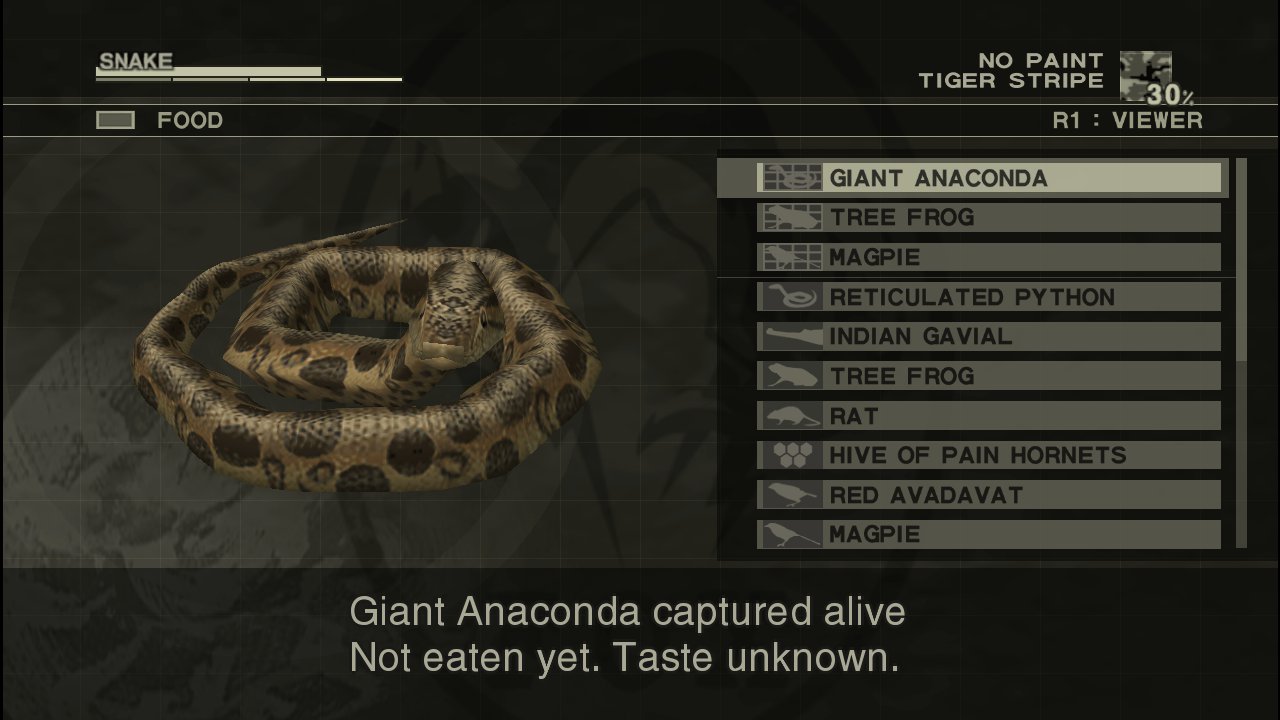
As you collect equipment, the number of different ways you have to get through each area will increase dramatically. You can avoid, kill, tranquillize and knock out enemies, interrogate them, jam their radios, distract them, throw venomous snakes at them... And there are a lot of areas to get through. Sneaking is now what you'll spend the vast majority of the game doing: through numerous large, open environments. This game dwarfs its predecessors, while still being packed full of little details and taking you through an absurdly wide variety of terrain types.

In addition to the refined gameplay, Metal Gear Solid 3 also tightens up the storytelling. Yes, there are still plenty of lengthy cut scenes - but they're considerably more focused, and with a lot less bald exposition. Nowhere is this more apparent than the boss fights with the various members of the Cobra Unit, who are left intriguingly mysterious - while bosses of previous games in the series usually poured their hearts out in lengthy, demystifying monologues. Elsewhere there's more of an emphasis on action, humour and actually getting to the point.

The cartoon-ish, sometimes supernatural characters are always interesting and frequently likeable. Ocelot, for example, who had been becoming more and more of a cackling, moustache-twirling villain, is here an ambiguous youth with conflicting ideals of honour and loyalty. The Boss is an awesome and sympathetic antagonist, making you hotly anticipate the final showdown, even as you understand Snake's reluctance to fight her. Snake himself is equal parts bad-ass super soldier and ignorant comic relief. And for all that many games may moralise about the ethics of war, it's difficult to imagine a more organic incentive not to kill your opponents than the creepy and blackly comic boss fight/puzzle that pits you against "spirit medium soldier" the Sorrow.

In one word: I found this game fun. The straightforward but flexible gameplay, the outrageous story, the unforgettable characters and their idiosyncratic boss fights, the explosive finale - everything adds up to an enjoyable and surprisingly unique whole.

30.4.12

Posty Posty

I'm busy for a couple of weeks, and everything goes and changes on me. At least it seems we finally have cuts in Blogger.


15.4.12

Played it: Metal Gear Solid 2 (HD Edition)


I loved the first Metal Gear Solid game for its unique atmosphere, memorable boss fights and endlessly inventive gameplay, but one thing I always thought it fell short on was the supposedly prominent sneaking element. There were only a handful of areas to sneak through, and once you learned the right strategies it was trivial to traverse them (arguably a good thing given the amount of backtracking). Yes, the game mixed things up occasionally – giving you a cold that alerts the enemy when you sneeze, or forcing you to figure out which guard is a disguised ally - but for the most part it was the bosses and action sequences that made the biggest impression.

Starting Metal Gear Solid 2, my immediate impression was that the stealth gameplay had finally matured. There are a large variety of ways to kill guards, knock them out or avoid them, and they've learned plenty of new tricks themselves for detecting your presence. This upgrade isn't one of realism, I should add, so although downed baddies no longer blink out of existence, if you want an assault rifle you'll have to find it in a floating power up rather than take one off the enemy. But that's all well and good: the Metal Gear games have never been about realism, but about presenting a world with a consistent set of video game-ish rules that even spill over into the story (where many game stories seem terrified of acknowledging how the world they're set in actually works).

So the stealth is pretty fantastic, equalling the Thief series in my estimation, and the boss fights and action sequences are naturally great as well, even if several seem analogous to parts of the previous game. I even quite liked the early twist in the story that enraged many fans at the time of the original release. Where the game did start to quickly burn through the good will it had earned was the ending. I found the final boss fight really fun, but it's sandwiched between two very lengthy cut scenes that are pretty much solid exposition.

I don't know, I really did like this game a lot, but I was hoping for a definitive Metal Gear Solid experience, and I still don't think this quite got there. The self-deconstruction is either very clever or utterly self-defeating; Big Shell is a cool location but the slightly wonky tone stops it from obtaining the epic atmosphere of Shadow Moses Island; and Dead Cell are a reasonable substitute for FOXHOUND but not quite as memorable.

Perhaps I would find what I looking for in Metal Gear Solid 3... (Spoiler: I did.)

5.4.12

Played it: Deus Ex: Human Revolution


Whether it's visuals or audio, you'll be hard pressed to find a more sumptuously atmospheric game than Deus Ex: Human Revolution. This is a future of audacious mega-structures, human augmentation, renaissance fashion - and, naturally, a cyberpunk underbelly of lofty goals turned sour. If nothing else, this game is a treat to explore.

Ignoring the second Deus Ex game (a mediocre shooter that might have been well received if not for its supposed heritage), and comparing it to the first, Human Revolution has more satisfying and consistent gameplay, and a tighter, more natural storyline. But the environments of the first game are still much larger and allow for more emergent styles of play. It's a shame that the focus on technically superior graphics above all else is leading to smaller and narrower games, even as platforms increase exponentially in power.

But despite a few hiccups (see also: the out-sourced and utterly incongruous boss fights), this is a first-class game that combines old-school ambition with a more refined sensibility.

25.3.12

Played It: Red Dead Redemption: Undead Nightmare


The over-saturation of zombies these past few years is often remarked upon, and add-ons shoe-horning them into otherwise unrelated games are far from uncommon. But this downloadable side-story (which I bought as a stand-alone disc), depicting the sudden intrusion of a zombie plague into the waning wild west of Red Dead Redemption, is one of those instances where two disparate parts mix to produce a strong, internally consistent tone.

The dry humour and moral ambiguity of the original game lead to an unusually Romero-esque zombie apocalypse, where the dead show glimpses of humanity, pathos and slapstick. In keeping with the God-fearing setting, they also have a decidedly supernatural element, displaying inhuman strength and moaning in creepy, distorted voices. Coupled with a considerable resistance to being shot anywhere other than the head, an encounter with a horde of these zombies carries genuine threat. In every way, these are far from the usual cannon fodder that we've come to expect from the video game undead.

Like the game it branches off from, Undead Nightmare excels at allowing you to inhabit its creepy world, oozing atmosphere and character, but, sadly, it's not really sure what to actually do with the setting. The main storyline involves finding the various characters from the original story and seeing how they've adapted to the dead rising from their graves. This bit is superbly handled, but once that's over we get only a highly unsatisfying ending that is then immediately undone in order to provide the new game+.

This whole new take on the original game is an astounding endeavour even so, but given how the "real" story so adeptly characterised its protagonist over the game and provided a note-perfect resolution, this otherwise entertaining spin-off can't help but suffer in comparison.

24.2.12

13.2.12


For a while now, it's been clear that my Space Cat has been getting old, but he's always kept his kittenish charm and seemed full of life.

Over the weekend he took a sudden turn for the worse, and while travelling to the vet's this morning, curled up in a fluffy ball, he peacefully passed away.

He's been one of my best friends for over fifteen years now. Although his departure isn't unexpected at this point in his life, it leaves a big hole in my life.

I'll miss him.

27.1.12

A Squirrel


How ya doin', squirrel?

31.12.11

2011: Adventures in Fiction

2011! A year in which I consumed media of various forms! Here's my triple-picks of each category of stuff...

--Of the movies I saw:

The Girl Who Leapt Through Time
Thriving on believable tensions among a cast of likeable characters, this film is by turns funny, bittersweet and heart-warming.

Monsters
Character-driven, atmospheric science fiction; an otherworldly road movie; eerily memorable.
District 13
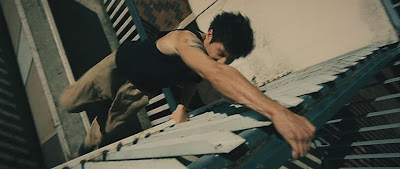
A toss-up between this and Ip Man as the two great action films I saw for the first time this year. I found the damsel in distress in this movie less off-putting than the relentless nationalism of Ip Man (not helped by that of every other Chinese film these past few years, it seems), but your mileage may vary. A perfect collision of bold cinematography and incredible physical prowess.

--Of the books I read:

The City and the City - China Miéville
The greatest achievement of this astonishing book is not just the imaginatively Kafkaesque culture it fleshes out – but also that it manages to be a gripping thriller throughout.

Above the Snowline - Steph Swainston
Although this lacks many of the more imaginative elements of Swainston's other books in the same series, it doesn't suffer from it, and still shows an unflinching veracity that's quite rare in the fantasy genre.

The Windup Girl - Paolo Bacigalupi
Despite embodying a fair few national stereotypes, this vision of a world in drastic decline kept me hooked both by teasing out the details of its bizarre future Thailand and with dramatic developments in its interweaving story threads.

--Comics and manga:

20th Century Boys - Naoki Urasawa
I imagine this will be here next year as well – an epic series that spans genres, decades and generations. Definitely a contender for my overall favourite thing on this list.

Pluto - Naoki Urasawa
The great detective Gesicht must find out who's systematically murdering the seven greatest robots in the world – not least because he's one of them. I read this series on the strength of how much I liked Urasawa's 20th Century Boys, and was not disappointed. Note-perfect storytelling frequently leads to deeply moving scenes.

Biomega - Tsutomu Nihei
Imaginative cyberpunk horror that envisions an almost unrecognisable future – and charts its utter transformation into something even stranger.

--Of the TV shows I watched:

Downton Abbey
Okay, the second series wasn't as solid as the first, but neither was it as appalling as many made out, and the Christmas special was a definite return to form. A beautifully realised period drama that embraces progress rather than fetishising the Good Old Days.

Avatar: The Last Airbender
The first season was pretty good, but the second and third tell an epic story full of likeable characters. For me, this lived up to the hype.

The Shadow Line
A show that was fantastically good only whenever it forgot that it knew it was fantastically good. Abundant with in-your-face symbolism and unnatural dialogue, and yet splendid all the same. Also possessed a perfect storm of acting talent in the form of Chiwetel Ejiofor, Christopher Eccleston and Rafe Spall.

--Of the games I played:
Red Dead Redemption
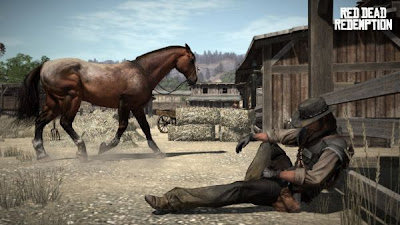
An open-world cowboy-stereotype simulator married to a character-driven shoot-em-up, this has gorgeous landscapes galore and the most unexpectedly likeable lead character.

Portal 2
Laugh-out-loud funny dialogue, head-scratching puzzles, understated poignancy. The last time I enjoyed the writing of a game this much was Grim Fandango.

Ghost Trick
A fiendish puzzle game that I found to be addictive and enjoyably challenging, but not so difficult that I needed to resort to a walkthrough. I probably wouldn't have been so sucked in, of course, if the gameplay wasn't so intricately entwined with exactly the kind of colourful characters and meticulously crafted, twisting-and-turning plot that you'd expect from Ace Attorney creator Shu Takumi.

--That's all folks...